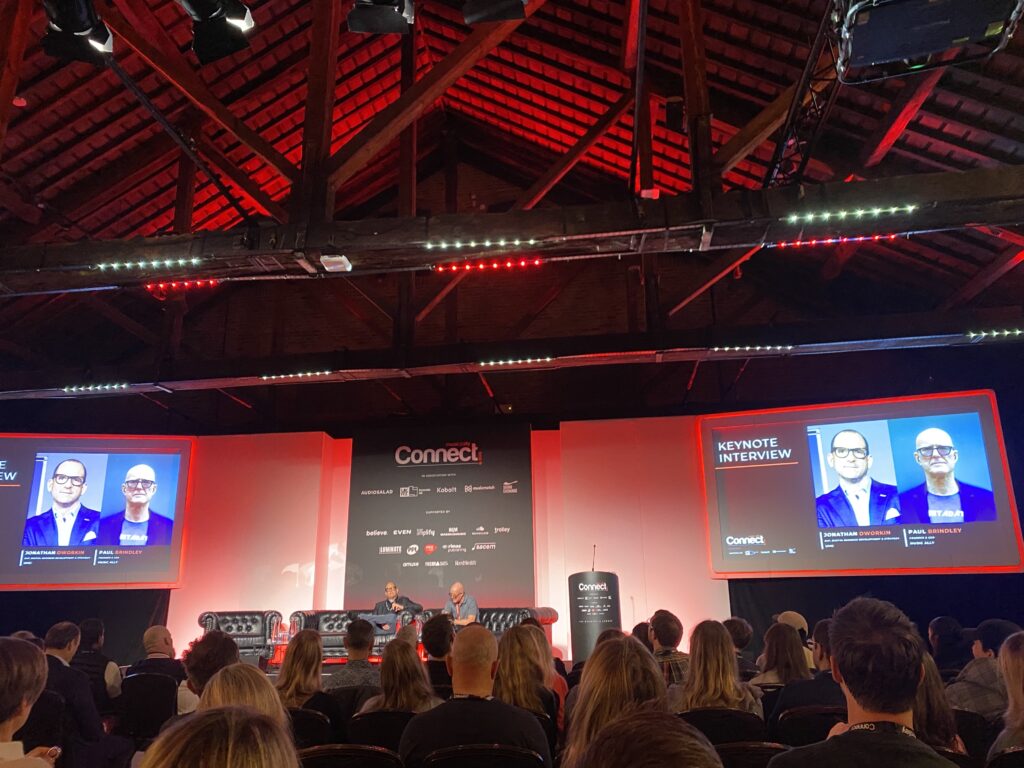
I attended a two-day music industry event last Thursday and Friday, Music Ally Connect 2026, and gained many market insights from industry players.
AI – sometimes Voldemort, sometimes the One Ring
AI is, of course, an inevitable topic. Many speakers tried not to touch on it – and failed. Most of them remained positive about AI, though for different reasons.
Jonathan Dworkin (EVP, Digital Business Development & Strategy at UMG) said that in the next few years, AI will definitely play a role, but people will still seek authentic experiences.
Stuart Dredge (Head of Insights at Music Ally) showed us many of his experiments with AI-generated songs using his own lyrics. Personally, I found them very catchy and I kind of liked them. I also think Stuart is a very witty and humorous person – listening to his sharing was a total joy. He even shared a meme showing musicians’ faces when they hear have you used AI to make music?
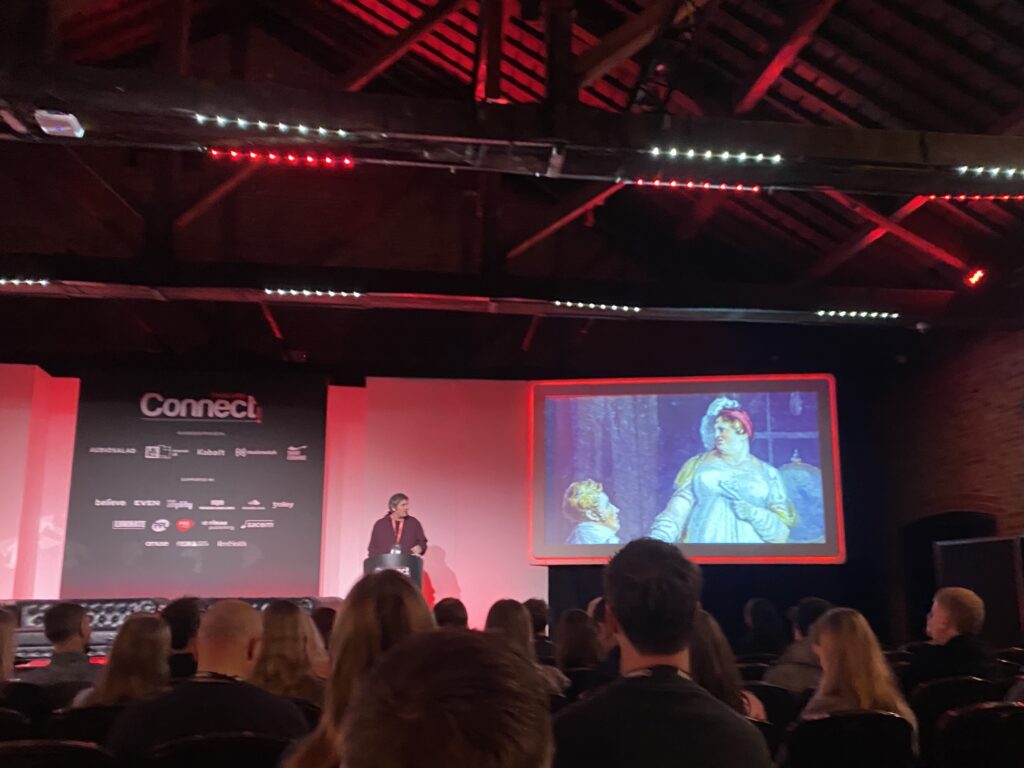
Laurent Hubert (CEO of Kobalt Music) said that AI will increase consumption, so he is positive toward it. When asked, ‘what gives you confidence in the future of publishing?’, he mentioned the rise of iTunes, then YouTube – people thought it was the end of the world. Then came Spotify. Yet today, there is still revenue from printed formats. Technology always comes with new layers of revenue. I totally agree, because the music industry has historically always ended up thriving (see my previous article here about music industry history).
Michael Huppe (CEO of SoundExchange) said that he is overall optimistic, not just for music but for photography and all kinds of arts, because we cannot accept living in a society where artists are not compensated. I think this also reflects what is happening in the music industry today, where licensing and compensation are major topics.
Charlie Lexton (CEO of Merlin) said that he does not think AI music will wipe out human music, because for him, the backstory of the artist is what truly matters.
Discussion afterwards
To be honest, I had been slightly more pessimistic about AI after I found out that I am one of the 97% of people who cannot tell AI and human music apart (see my previous article here about Deezer’s market research).
I thought that perhaps the only hope for us is live music, because at the end of the day, people would still like to listen to live performances and probably would not want to see robots playing music.
I discussed this with James Quinn from Beautiful Digital, whom I met during the break. He did not seem convinced by my point that people would not enjoy robots playing music, but his overall view toward AI is optimistic. He thinks it is new, so people are talking about it a lot now, but that this hype will pass.
International Markets
When artist managers were asked what interesting international markets are, Martha Earls (Owner/Manager at Neon Coast) said South America and Southeast Asia. Will Bloomfield (Co-President & Head of Global Artist Management at TAP Music) said that Australia is a good market.
Priya Dewan (CEO of Gig Life Pro) said it is actually difficult to define a single Asia strategy, because there are so many different countries and cultures. There is no one-size-fits-all approach, and she always prefers having someone on the ground.
She also shared a fun fact about social media in Southeast Asia that I had gotten used to without noticing: people don’t just show the best side of themselves. They share daily life, music they listen to, and what they like. Social media feels more open in this sense.
Jay Kogami (Editor at Music Ally Japan) said that there was not much export of Japanese music until recent years, but it is now slowly growing. For me, as a Chinese person, Japanese music has been exported to Hong Kong, Taiwan, and mainland China for a long time. Many pop songs in Hong Kong from my parents’ generation were originally Japanese, and there was a period when some Hong Kong and Taiwan singers even went to Japan to develop their careers.
This conference was truly an eye-opening experience and a realisation of things I already knew but had never fully thought about before. It also surprised me how few Chinese people were attending the conference or involved in the music industry here in the UK. I believe there is huge potential for both traditional Chinese music (speaking as a guzheng player) and modern Chinese music to be exported – as well as a strong market for music imports into China.